Duchenne Muscular Dystrophy (DMD) Program
nationally ranked care, close to home
Meet the Care Team
Patient Stories
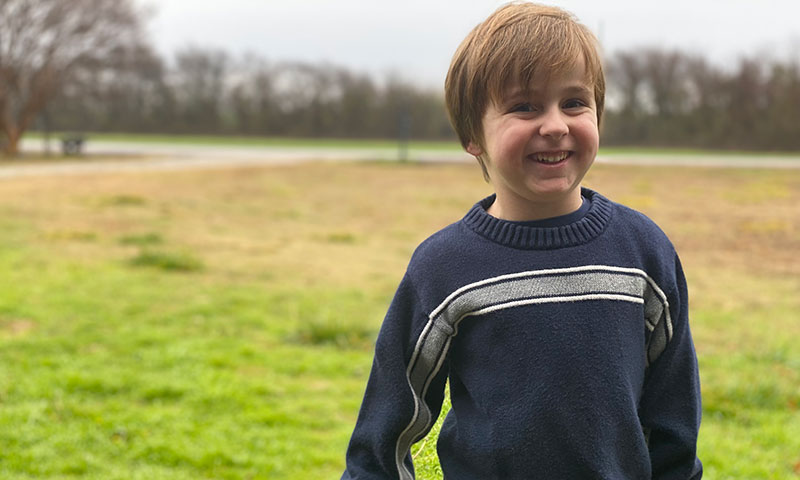
Harrison's story: How gene therapy could help against Duchenne muscular dystrophy
When Pam first heard about gene therapy, she thought it sounded like science fiction. She never would have guessed her son would be among the first patients to receive an innovative new gene therapy that's giving new hope against Duchenne Muscular Dystrophy (DMD).
Conditions We Treat
Pediatric Charcot-Marie-Tooth disease (CMT)
Pediatric chronic inflammatory demyelinating polyneuropathy (CIDP)
Congenital myopathy
Pediatric Guillain-Barré syndrome (GBS)
Myasthenia gravis (MG) in children
Pediatric myotonic dystrophy
Spinal muscular atrophy (SMA) in children
Central Core Disease
Congenital Muscular Dystrophy (MD)
Congenital Myasthenic Gravis Syndrome
Duchenne Muscular Dystrophy (DMD)/Becker Muscular Dystrophy (BMD)
Emery-Dreifuss Muscular Dystrophies
Facioscapulohumeral Muscular Dystrophy (FSH)
Friedreich’s Ataxia
Limb-Girdle Muscular Dystrophy (LGMD)
McArdle Disease
Metabolic Neuropathies
Mitochondrial Disorders
Myotonia Congenita
Nemaline Myopathy
Periodic Paralysis
Pompe Disease
More Details
Treatments and Services
There is no cure for muscular dystrophy. However, some medications are able to slow muscle weakening and many physical therapies help strengthen muscles lungs, preserve mobility and independence. Our DMD team works together to design a personalized care plan for each patient that is based on:
The child's age
Overall health and medical history
The progression of the duchenne muscular dystrophy
The child’s ability to tolerate different medications, procedures and therapies
Expectations for the course of the condition
Family needs and priorities
Non-surgical care to help manage symptoms
Physical and occupational therapy to build strength, maintain flexibility and support everyday movements
Speech therapy improve communication when face muscles weaken
Respiratory therapy to help with breathing
Regular cardiac evaluations
Positioning aids used to help the child sit, lie or stand
Braces, splints and wheelchairs to prevent deformity, promote support and provide protection
Medication
Nutritional counseling and diet planning
Surgical care to manage complex symptoms
Procedures to correct scoliosis (a sideways curvature of the back bones) and joint contractures
Surgery to implant a pacemaker for heart problems
Surgery to remove cataracts
Learn more about treatment with Elevidys
A World-Class pediatric Duchenne Muscular Dystrophy program
When you first come to the Duchenne Muscular Dystrophy (DMD) program, your child will receive a whole-body assessment that will include physical tests, blood tests and muscle biopsies.
Children’s Health experts understand the specific ways that muscular dystrophy affects breathing, heart function and other aspects of your child’s health.
The most common programs and clinics our patients receive care from include:
We also actively pursue new and better ways to treat DMD through research and clinical trials. Ongoing research includes studies for advanced techniques like gene therapy and exon-skipping technology, which aims to restore a protein that doesn’t work properly in patients with DMD.
Convenient, coordinated muscular dystrophy care
Usually, muscular dystrophy care requires patients to juggle several appointments at different medical offices. This can require traveling great distances and missing multiple days of school.
At our clinic, we schedule appointments so that your child sees all their doctors in a single visit. This multidisciplinary appointment is more convenient for you and your child. It also enables our team to work together and quickly move forward with the care your child needs.
Living with Pediatric Duchenne Muscular Dystrophy
Children with duchenne muscular dystrophy will experience muscle weakness throughout life. Eventually their muscles will start to break down causing them to need progressively more acute care and support.
DMD patients develop enlarged calf muscles, while their thigh muscles become thin. Their tongue and forearm muscles may also become enlarged. Progressive joint stiffening will reduce their flexibility and limit their ability to move independently.
Many children will develop severe spinal curvature (scoliosis).
Pulmonary complications are also common due to weakness in chest and throat muscles. When this happens, children have difficulty coughing and swallowing, which can cause frequent lung infections. Eventually, the heart muscles will begin to break down, causing cardiomyopathy.
Support for the child and family
We take extra steps to help kids live well with DMD, and we support families throughout the care journey. We take time to educate families on the disease and how this condition can affect their lives. We’re there to help with every aspect of living with DMD, from working with schools to getting wheelchairs and making other accessibility changes.
We also aim to have each child to see themselves as capable as every other child. Our team will integrate your child’s wants and needs into their treatment and use those goals as motivation to pursue new milestones. We have a number of resources to participate in adaptive sports and other activities.
Coordinated care for complex needs
Some children may eventually need surgery for scoliosis, cataracts or heart problems. Your child’s DMD team will work closely with the inpatient care team to plan their recovery and new therapeutic needs.
All DMD patients will eventually need extensive heart and lung care. A cough-assist machine will help your child get a deeper breath and clear their airway. Many Duchenne patients eventually need a machine to help with breathing (bilevel positive airway pressure, Bi-PAP). Medicines can help the heart move blood around the body and some will need a pacemaker.
Partnering with other clinics
Some families find regular outpatient care close to their home or school. We can partner with specialists in your area and can continue to provide specialty care as needed.
Children's Health Resources
Our clinic is a certified Duchenne Care Center by the Muscular Dystrophy Association and the Parent Project Muscular Dystrophy. We treat children of all ages, from diagnosis to their transition to adult care.
Duchenne Muscular Dystrophy (DMD) is the most common form of muscular dystrophy and typically affects boys. It usually starts between ages 2 and 5 and affects many aspects of a child’s health, from their ability to walk to the strength of their heart and breathing muscles.
Children’s Health neuromuscular disease experts understand the specific ways that muscular dystrophy affects breathing, heart function and other aspects of health. We collaborate with specialists from pulmonology, cardiology, rehabilitation medicine, orthopedics, endocrinology and nutrition to give patients the best possible care.
We use preventive care to keep your child’s body strong and avoid complications. Our preventive approach includes devices that help support breathing to prevent respiratory illness, and heart medication that helps kids stay healthy and active.
We also prioritize normalizing everyday tasks and experiences like getting ready for school, playing with friends and getting around the community. Together, we are ready to help your child retain their strength, prepare for changes.