Pediatric Gastroenterology

Expert care, proven results for children’s digestive disorders
Top-Ranked Program
Our nationally ranked, multidisciplinary team provides expert care for diverse GI conditions—with quick access to appointments when you need us.

Specialized Care
From IBD to liver disease, our 20 disease-specific programs deliver expert, compassionate care for children.

Innovative Treatment
We combine leading research with advanced treatments to help kids feel better and live healthier, happier lives.
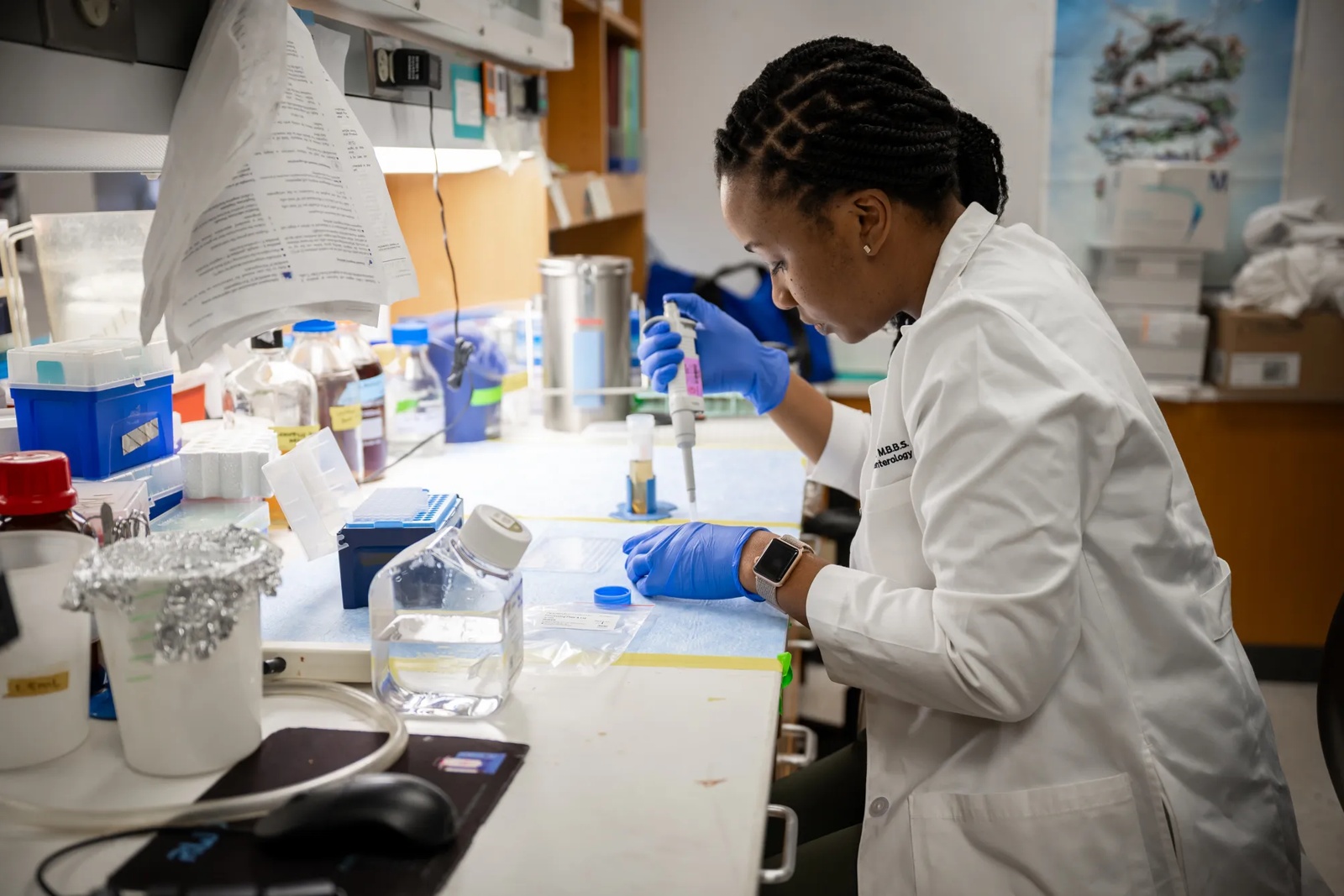
nationally ranked care, close to home
Caring providers dedicated to children’s GI health
Patient Stories
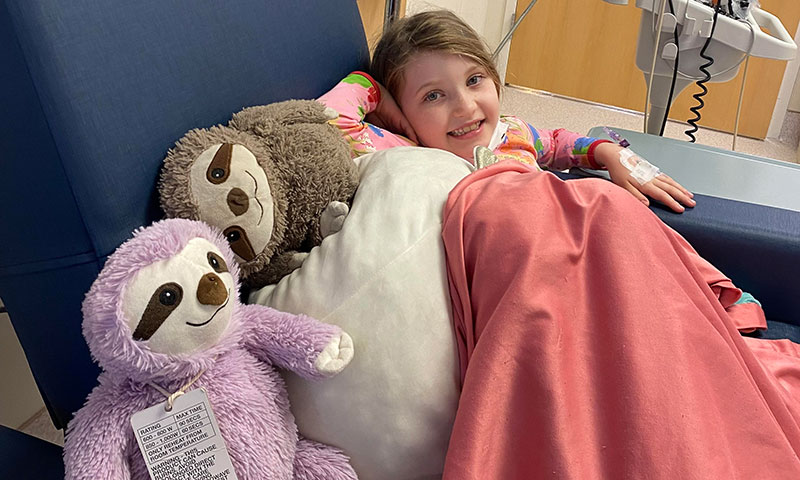
Sammy’s story: Staying strong through Crohn’s disease
Seven-year-old Sammy loves soccer, ballet and spending time with her best friend and big sister, Ella. She also has a whole collection of sloth stuffed animals.
Resources
Support and helpful tools for your family
These resources help you and your family navigate every aspect of your child's care at Children's Health, from preparing for your child’s visit to accessing health insurance information.
Our Programs
Multidisciplinary Pediatric Aerodigestive Clinic (MPAC)
Pediatric Celiac Disease Program
Pediatric Eosinophilic Disorders Program
Pediatric Inflammatory Bowel Disease (IBD) Program
Pediatric Intestinal Rehabilitation Program
Pediatric Neurogastroenterology and Motility Disorders Program
Pediatric Pancreas Disease Program
Pediatric Therapeutic Endoscopy Program
Chronic Abdominal Pain Clinic
Pediatric Gastroenterology (GI) Lab
Cystic Fibrosis Program
Pediatric Weight Management Program
Feeding Program
Metabolic Dysfunction-Associated Steatotic Liver Disease (MASLD) Program
Conditions We Treat
Pediatric abdominal migraines
Pediatric chronic abdominal pain (stomach ache)
Pediatric achalasia
Pediatric Alagille syndrome (ALGS)
Pediatric alpha-1 antitrypsin deficiency (A1AT)
Anorectal malformation (imperforate anus or ARM)
Pediatric ascites
Pediatric celiac disease
Colic in babies
Pediatric constipation
Pediatric biliary atresia
Pediatric Crohn's disease
Pediatric Crigler-Najjar syndrome
Pediatric cyclic vomiting syndrome (CVS)
Cystic fibrosis (CF) in children
Dubin-Johnson syndrome in children
Pediatric dysphagia (swallowing disorder)
Pediatric encopresis
Pediatric eosinophilic gastrointestinal disorders (EGIDs)
Pediatric esophageal stricture
Failure to thrive (FTT) in children
Pediatric fecal incontinence
Pediatric feeding disorder (PFD)
Pediatric functional abdominal pain syndrome (FAPS)
Pediatric gallbladder disease
Pediatric gastroesophageal reflux disease (GERD)
Pediatric gastroparesis
Gastroschisis
Pediatric gastrointestinal (GI) bleeding
Pediatric Gilbert’s syndrome
Juvenile hemochromatosis
Pediatric hepatitis A
Pediatric hepatitis B
Pediatric hepatitis C
Hirschsprung's disease
Pediatric inflammatory bowel disease (IBD)
Intestinal atresia in children
Pediatric intestinal pseudo-obstruction
Pediatric irritable bowel syndrome (IBS)
Pediatric intestinal failure
Pediatric intrahepatic cholestasis liver disease
Pediatric liver failure
Pediatric liver (hepatic) tumors
Pediatric malabsorption
Pediatric metabolic liver disease
Pediatric microbiome imbalance (dysbiosis)
Pediatric necrotizing enterocolitis (NEC)
Metabolic Dysfunction-Associated Steatotic Liver Disease (MASLD)
Pediatric pancreatitis
Pediatric pancreatic fluid collections
Pediatric pancreas disease
Pediatric exocrine pancreatic insufficiency (EPI)
Pediatric pancreatic malignancy/trauma
Pediatric peptic ulcer
Familial adenomatous polyposis (FAP)
Pediatric rumination syndrome (merycism)
Pediatric short bowel syndrome (SBS)
Pediatric ulcerative colitis (UC)
Pediatric Wilson’s disease
Pediatric gastroenteritis (stomache flu)
Pediatric colon polyps
Pediatric cirrhosis
Pediatric microscopic colitis (lymphocytic colitis or collagenous colitis)
Pediatric lactose intolerance
Pediatric eosinophilic gastroenteritis (EGE)
Pediatric eosinophilic esophagitis (EoE)
Pediatric eosinophilic colitis (EC)
Pediatric diarrhea
Esophageal atresia (EA)
Pediatric nausea and vomiting
Pediatric glycogen storage disease
Pediatric eosinophilic gastritis (EG)
Pediatric megacystic microcolon intestinal hypoperistalsis (MMIHS)
Pediatric autoimmune hepatitis (AIH)
Pediatric feeding tube dependency
Pediatric Ehlers-Danlos syndrome (EDS or elastic skin)
Pediatric esophageal varices
Acute pancreatitis
Chronic pancreatitis
Hereditary pancreatitis
Treatments & Services
Pediatric endoscopic procedures
Pediatric liver transplant
Pediatric video capsule endoscopy
Pediatric pH probe study
Rectal suction biopsy
Pediatric Enteral Nutrition
GI Psychology Services for Patients with Abdominal Pain
Pediatric Colonoscopy (Lower Endoscopy)
Pediatric polypectomy
Pediatric parenteral nutrition
Pediatric unsedated transnasal endoscopy (TNE)
Anirectal manometry
Antroduodenal manometry
Balloon enteroscopy
Band Ligation and Sclerotherapy of Esophageal Varices
Botulinum toxin injections or Botox injections
Live Biopsy
Colonic Manometry
Dupixent™ (Dipilumab)
EndoFlip™
EsoFlip™
Endoscopic Management of GI Bleeding
Endoscopic Retrograde Cholangiopancreatography (ERCP)
Endoscopic Ultrasound (EUS)
Esophageal Dilatation
Esophageal manometry
Esophagogastroduodenoscopy (EGD)
Entyvio (vedolizumab)
Flexible Sigmoidoscopy
Foreign Body Removal
Gastric emptying scan
Impedance Probe Testing
Lactose and Urea Breath Testing
Motility Studies
Percutaneous Endoscopic Gastrostomy (PEG) Placement
Remicade infusions (Infliximab, Inflectra)
Unsedated transnasal endoscopy (TNE)
More Details
Whether your child is suffering from stomach pain, constipation or celiac disease, we are here to help. Our team will work with you to understand your child’s GI issues to provide personalized care that meets their individual needs.
No matter the reason for your visit, we create a welcoming and child-friendly environment to keep your child calm and comfortable.
When our team sees a child with a GI condition, we don’t just treat the symptoms – we do our best to identify what’s causing them. For example, doctors in our Pediatric Inflammatory Bowel Disease Program may perform genetic tests to try and identify the genes that contribute to your child’s condition. In some children, genetic testing can help us identify the specific subtype of their disease. Then we can try to match them with a therapy that is known to work against that particular subtype.
We offer more than 20 different advanced GI programs to treat some of the most complex conditions, such as cystic fibrosis and liver disease. Our comprehensive programs and expertise in pediatric GI care are what sets us apart from other pediatric medical centers in North Texas.
To provide the most innovative care, we use state-of-the-art endoscopic procedures and techniques. For instance, we are experts in using pediatric endoscopy to look inside the GI tract and assess, diagnose and potentially treat a range of conditions. Our expertise gives your child access to the most effective, least invasive techniques available.
We go beyond traditional medicine by incorporating innovative approaches to provide comprehensive care. These innovations include advanced clinical research that assesses promising new medications and explores novel treatments for pediatric gastrointestinal disorders.
Our cutting-edge approach to GI care also includes integrative techniques, such as yoga, behavioral therapy and lifestyle changes. We partner with pediatric wellness instructors and psychologists to see how your child can benefit from these complementary approaches
You don’t have to come to Dallas to benefit from our world-class care. Our affiliation with UT Southwestern enables families to enjoy care from our physicians and providers at multiple locations in North Texas, including Plano and Frisco. We also provide online scheduling at some locations, so families can book appointments at their convenience.