Pediatric Therapeutic Endoscopy Program
nationally ranked care, close to home
Meet the Care Team
Patient Stories
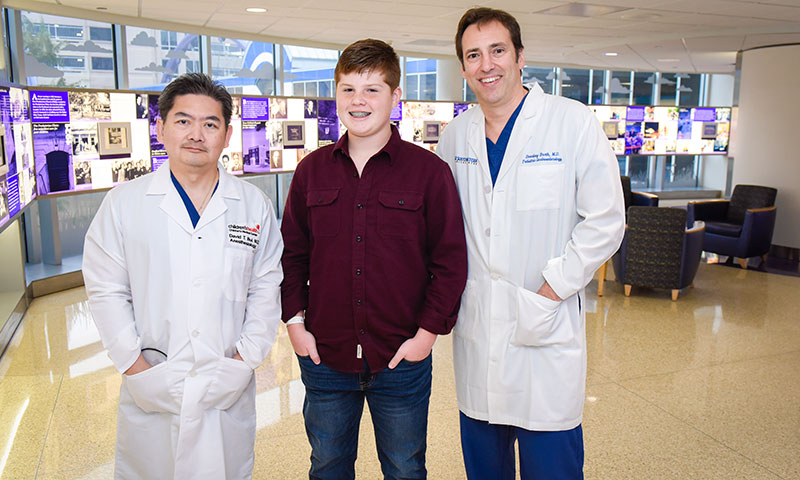
A doctor's dedication and a patient's road to recovery
Brayden accidentally drank a caustic chemical that caused third degree burns to his mouth, esophagus and stomach. Brayden was rushed to a local hospital, and the medical team there contacted Children's Health℠, requesting help.
Treatments & Services
Endoscopic Retrograde Cholangiopancreatography (ERCP)
Endoscopic Ultrasound (EUS)
Lower Endoscopy
Polyposis
Upper Endoscopy
More Details
Central and founding site for Pediatric ERCP Database Initiative (PEDI)
This information-sharing eliminates variability of care by helping to craft a uniform set of treatments for a given condition. It’s just one more way we help your child — and every child — get well and back to the job of being a kid.
The only program of its kind in North Texas
The pediatric therapeutic endoscopy program has pediatric physicians from UTSW on site who are capable of performing endoscopic retrograde cholangiopancreatography (ERCP), which is not available anywhere else in North Texas or surrounding states. ERCP can help doctors detect tumors, stones or narrowing of the bile ducts using a combination of photographs and X-rays.
We’re also one of the only facilities in the country that uses a balloon procedure to diagnose and treat small intestine conditions in children. The procedure is vital to the diagnosis of a variety of conditions, including tumors and ulcers. It also offers your child the least invasive, most comfortable experience possible.
How it works
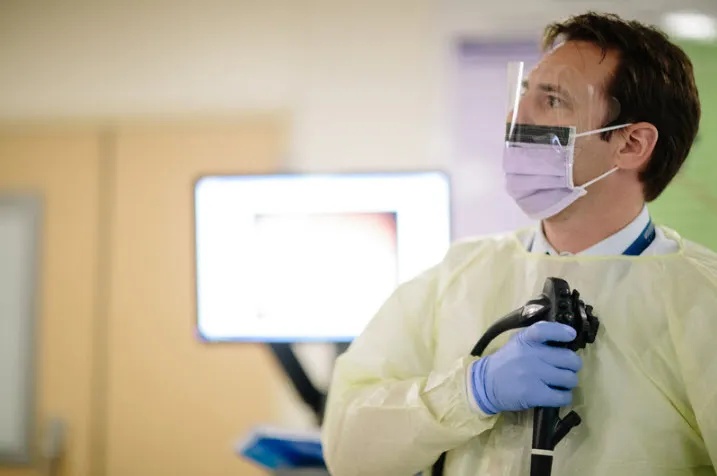
During therapeutic endoscopy, a doctor will gently pass an endoscope — a long, flexible tube with a camera attached — down your child's throat while she sleeps. The doctor cannot only look for problems in the digestive tract (including the bile ducts, liver and pancreas) but can also treat certain conditions using special attachments.
Resources
Children’s Health℠ is one of the few institutions in the nation offering advanced pediatric therapeutic endoscopy procedures in our nationally recognized program. Services include endoscopic retrograde cholangiopancreatography (ERCP), endoscopic ultrasound (EUS) and cholangioscopy for the treatment of biliary and pancreatic disease.
We have significant experience in the management of acute and chronic GI bleeding, including the use of video capsule endoscopy and single-balloon enteroscopy. The program also performs endoscopic feeding tube and manometry catheter placement, as well as advanced therapy for simple and complex esophageal strictures.